Public discussion draft / November 2026

Health care that
goes with you.

One public plan for eligible residents, with no premiums, copays or deductibles for covered care. Your coverage follows you when you change jobs or move.

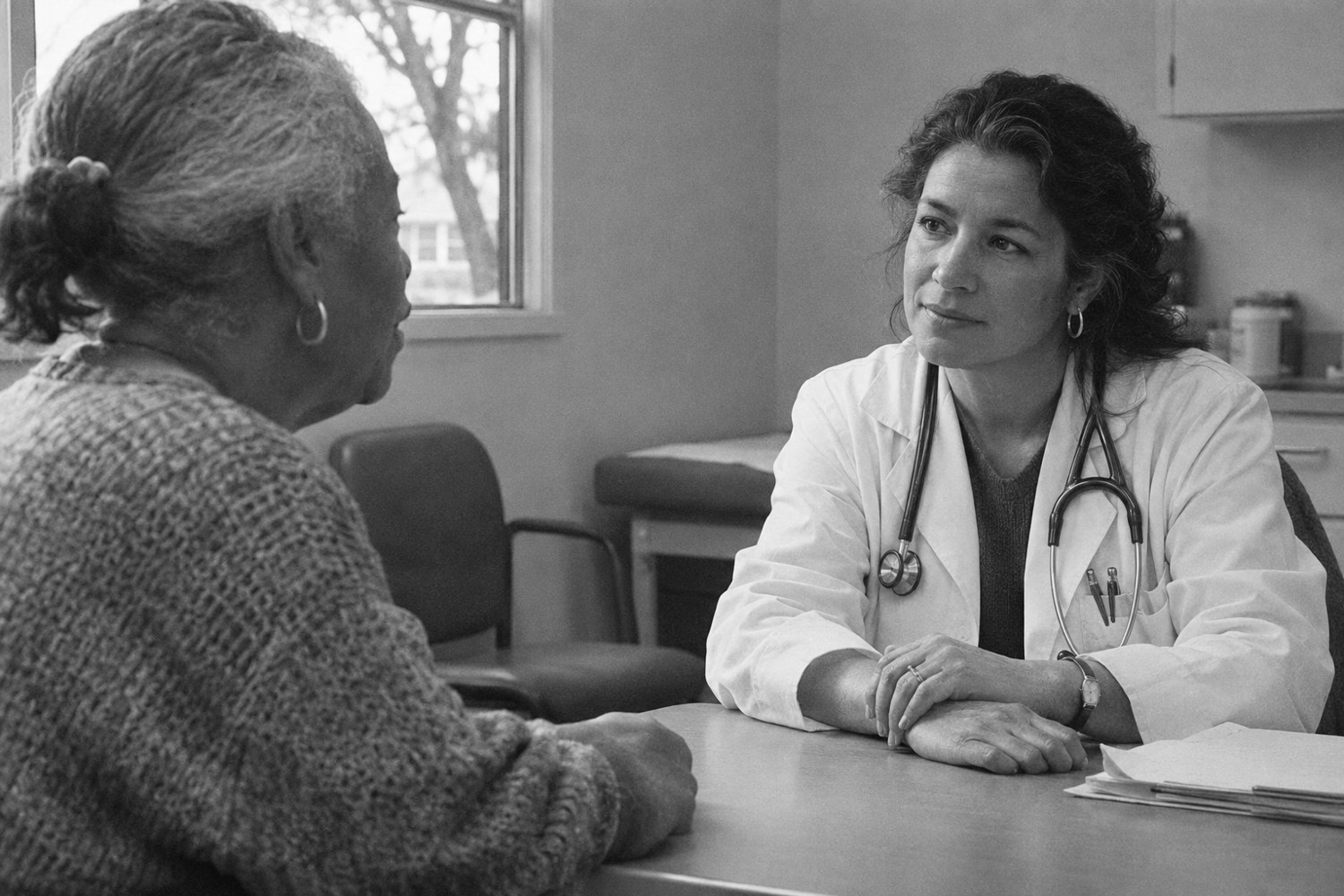
Illustration of an older patient speaking with a clinician in a community clinic
Community care Illustrative image
$0

At the point of careFor covered visits and prescriptions.

12%

Employer starting rateOf covered payroll, before credits.

6%

Household starting rateOn income above the allowance.

The proposal

Ten things this bill would change.

One public plan would pay for covered care. These are the changes people would see at the doctor’s office, at work and on payday.

  1. Keep coverage between jobs

    Leave a job, cut your hours or start a business. Eligibility follows the resident. §101

  2. Get care without a bill at the visit

    Covered medical, dental, vision, hearing and mental health services have no premium, deductible or copay. §102

  3. Choose a participating clinician

    Keep a doctor who participates and has room. Veterans can also keep their VA team. §502

  4. See the change on payday

    A household contribution replaces the insurance deduction. The employer pays its share separately. §202

  5. Get an appointment offer by a deadline

    Routine primary care has a 15-business-day limit and routine specialists have 30. Clinical urgency can require faster care. §603

  6. Appeal a denial for free

    A named clinician explains the decision. A different clinician decides an urgent appeal within 24 hours. §103

  7. Keep both ends of a rural transfer open

    The region buys staffed ER shifts, transport and a team with a staffed bed ready to receive the patient. §829

  8. Negotiate the price of medicines

    A new drug’s added clinical benefit informs its launch price. Rebates can recoup excess branded-drug spending. §827

  9. Know who qualifies

    Full coverage requires residence and a qualifying legal status. Emergency and specified public health services reach others. §108

  10. See the budget before a vote

    Publish the independent score, access tests and the cash left after care, reserves and startup debt. §805

Household finances

What changes on
your paycheck?

The sponsor recommends Schedule B. It replaces the premium deduction with a household contribution. The bill’s two examples show why take-home pay can move in either direction.

Try your own income
Monthly pay statementSchedule B

$150,000 household

One earner · joint return · two qualifying children

Paycheck lineTodayProposed
Change in monthly take-home pay+$37.98
Bill examples hold wages constant and exclude state and local taxes. Medical bills avoided when someone uses covered care are separate. ¹ Employer spending is separate from the employee’s deposit.
Estimate your household contribution

What would the new deduction be?

Estimated monthly contribution$400.00

Schedule B wage-income illustration under §202, before credits, refunds, other high-income measures or self-employment charges. This estimates the household contribution only. All entries stay in your browser.

National health spending

When would the country spend less?

In the planning case, spending first falls below current law in 2032. By 2034 the country spends about $107 billion less that year. If prices fall less and more staff are needed, the downside case spends $253 billion more.

U.S. health spending during the rollout

Annual savings against current law · nominal $ billions

PlanningDownside

Above zero means the country spends less. Across 2028–34 as a whole, the planning case still costs about $81B more than current law, using the rounded yearly estimates.

See the seven annual estimates
YearCurrent law ($T)Planning ($T)Downside ($T)Planning savings ($B)Downside savings ($B)
20286.636.676.68−39−48
20296.977.087.18−111−208
20307.327.397.56−72−238
20317.697.747.98−53−295
20328.078.058.34+16−266
20338.518.448.77+71−256
20348.978.869.22+107−253

Totals and differences are rounded independently. Bill spending projections

Prices, paperwork and new care

Where do the savings come from?

The plan negotiates lower prices and replaces multiple insurers’ billing systems. It also pays for visits people previously skipped, higher Medicaid rates, and staffed facilities. The difference determines the national savings.

What changes in 2034

Lower payments and overhead

$671B
Insurance administration, after replacement costs$169.8B
Lower hospital payments from commercial coverage$325.7B
Lower commercial clinician payments$109.2B
Negotiated retail drug prices$66.3B

Added spending

$564B
Higher rates for care now paid by Medicaid$70.5B
Rural ERs, transfer beds and other essential capacity$144.0B
Extra visits, staff and newly used care$174.9B
Dental, vision, hearing and other funded programs$175.0B

$106.7B lower national spending

A lower hospital or drug price reduces the payer’s bill. Only a reduction in the work or resources required is an operating efficiency. Figures are rounded. The last spending line includes $55B for dental, vision and hearing, $100B for other programs and $20B for academic medicine.

Itemized bill ledger

Trust financing

How would money reach the debt?

Contributions and existing public funds pay claims and build a 60-day reserve. Operating surpluses then repay startup advances with interest. Beginning the next full year, §816 sends 90% of eligible surplus toward publicly held debt.

Annual payments toward publicly held debt

Planning case · 4% medical and payroll growth after 2034 · nominal $ billions

$910B

Approximate peak startup borrowing in 2032. Repaid in 2037.

$0 annually in 2028–37
2038
$247.1B
2039
$257.0B
2040
$267.3B
2041
$278.0B

The first four payments total $1.0494T. In 2034, the bill attributes $106.7B of national savings to the changes above, but only $34B of incremental Trust cash. Taxes and other receipts also affect the Trust balance. An official federal budget score would measure the overall change in the deficit.

Annual Trust cash table · Debt payment rule

The fiscal test

What if costs
rise faster?

The plan pays for care, maintains its reserve and repays startup borrowing before transferring 90% of eligible surplus toward publicly held debt.

Sponsor estimates. CBO and JCT have yet to score the proposal.

Annual medical cost growth after 2034

Cumulative payments toward debt

By 2041
$1.05T
By 2051
$4.52T

The starting employer rate covers operating costs in the planning case. Startup borrowing clears in 2037.

Fixed 12% employer rate and full state collections. Base funding includes $113B for rural and receiving hospitals and $20B for academic medicine in 2034. “Overlap” means existing allowances pay part of the same hospital need. The separate §803 adjustment can raise the employer rate. Hospital funding scenarios.

Questions and answers

What would this mean for me?

Coverage and choice

Who gets full coverage? Does a Social Security number decide it?

Residents qualify through citizenship or nationality, permanent residence, refugee or asylum status, or specified temporary worker and dependent categories. A Social Security number helps match records. Each family member qualifies individually, and an eligible newborn is covered from birth. §101

What care is available to undocumented residents?

The Trust pays for emergency screening, stabilization and appropriate transfer, vaccinations, and testing and treatment for communicable diseases. Other care can be self-paid or covered by a separate state program. A later immigration law could change eligibility when someone actually receives qualifying status. §108

What happens to Medicare, Medicaid and home care?

Covered benefits transfer in stages. Premiums for transferred Medicare benefits end, and dental, vision and hearing join the package. People who qualify under existing Medicaid home-care rules keep that benefit. Medicaid nursing-home coverage continues until Congress funds and delivers an equivalent or better replacement. Universal long-term home care needs separate funding. §102

Can I keep my doctor or my VA team?

You may use any qualified participating clinician with capacity. Veterans may stay with their VA team and use participating community clinicians for ordinary national-plan care. VA specialty missions keep their own funding. §701

When would my current coverage change?

The first year starts at least 12 months after enactment. Eligible uninsured people may elect early enrollment. The remaining age groups enter in stages through year four. Existing coverage continues until replacement is confirmed, and current prescriptions, scheduled procedures and treatment authorizations carry over. §801

Can someone buy a faster appointment with cash?

The draft prohibits selling priority for covered services through cash fees, concierge memberships or duplicate insurance. Shared appointment slots follow clinical urgency. Private payment remains available for services outside a person’s benefits. §602

Paychecks, employers and workers

Would I actually take home more money?

It depends on what you pay now. With wages held constant, the bill’s $150,000 family of four gains $37.98 a month. The $100,000 single worker loses $251.98 a month. Neither example counts the covered medical bills that disappear when care is used. Compare the two pay statements above. §202

How much does a small employer pay?

The starting employer rate is 12% of covered payroll. Below $1 million of payroll, the firm pays half the levy for two covered years, then three-quarters for two years. Relief tapers between $1 million and $2 million. A business that currently offers no coverage takes on a new payroll cost. §205

What if I work for myself?

Schedule B charges 10% of positive net active business earnings, plus the household contribution. A credit of up to $3,000 single or $6,000 joint phases out with income. The direct-contribution refund can further limit the total. In the bill’s single-filer example, $100,000 of net profit yields an $8,000 combined annual contribution after the refund. §203

How does this affect union benefits and wages?

The union can bargain over employer contributions freed when health benefits transfer. The bill assumes no automatic raise. Its affordability test counts the possibility that employers pass some new payroll costs to workers through slower wage growth. §802

What happens to insurance and billing workers?

A worker displaced by the bill can receive up to two years of wage replacement, retraining and preference for claims, enrollment or access jobs at the Trust. The transition budget is capped at 1% of annual Trust outlays in the first five program years. §818

Waits and patient rights

What if the first office I call has no appointment?

If a deadline is at risk, the regional office must arrange a reachable appointment, buy extra clinic time or cover necessary travel. The 15- and 30-business-day standards are for routine appointment offers. A clinician sets the treatment deadline. Regions must publish how long completed care actually takes. §604

Could we still have long waits like Canada or parts of Europe?

Yes. Coverage can increase demand before enough clinicians and operating time are available. OECD data show large differences in waits across countries and procedures. The bill budgets $83B for additional access sessions in the planning case, tests capacity before conversion and requires a backup booking. Actual completed visits will show whether that money buys enough time. §607 OECD wait data

Do Canadians pay cash to get treated in the United States?

Some Canadians receive care in the U.S. Who pays depends on the case. When British Columbia lacked radiation capacity, the province arranged treatment in Washington state. By April 2025, 1,107 patients had completed treatment through that program. This is one documented example, not a nationwide count of medical travel. §604 B.C. program report

Who decides if treatment is denied? Could a committee decide end-of-life care?

Patients and their treating teams choose medically appropriate end-of-life care. A named clinician must explain a coverage denial. Age or disability alone cannot justify denial. A separate clinician hears a free appeal within 24 hours for urgent cases or 15 business days for routine cases. Immediately necessary care can proceed during review. §103

Who holds the government accountable if the rollout fails?

Regions must pass independent checks on claims, continuity and staffed capacity before taking over. If a region fails, the existing payer can stay on temporarily as a paid administrator. An ombudsman can order a remedy. GAO audits spending and access, including denials and closures. §804

Doctors, hospitals and medicines

Would the government employ my doctor?

Independent practices and hospitals can continue delivering care. The Trust buys the covered service. Practices can close an objectively full panel on equal terms. Clean claims are due in 14 days, and primary care is targeted to reach 12% of Trust payments over ten years. §502

How would a rural ER stay open overnight?

The planning allowance in 2034 is $18B for rural facilities and $95B for receiving hospitals. Regions must verify filled shifts, staffed beds and actual transfers at both ends. If an essential service cannot operate on its budget, the plan requires a verified bridge payment or a staffed, reachable alternative before the affected cut. §829

What would hospitals be expected to cut?

Hospitals must document savings in billing, management, purchasing and contract staffing as Medicare-based budgets phase in. They cannot claim an unfilled ER shift or an unavailable transfer bed as a successful efficiency. A bridge buys time for a cost plan and is reconciled against actual expenses. §830

What happens to teaching hospitals and medical research?

Training, specialist standby, research costs, trials and capital have named accounts. The central academic appropriation reaches $20B in 2034. Awards are reconciled against existing grants and hospital budgets so the same staffed team or equipment is paid for once. §831

Would lower drug prices discourage new treatments?

Negotiators compare a new drug with existing treatment and revisit its price as evidence improves. Manufacturers can owe rebates above the branded-drug budget, with shortage protections. The draft also funds research and prizes. The effect on future drug discovery remains uncertain. §827

Taxes and the federal debt

Is 12% a permanent employer tax ceiling?

The sponsor recommends Schedule B, starting at 12% of covered employer payroll and 6% of household income above allowances. Schedule A is a scoring comparison. If a certified operating gap remains after cost controls, §803 can raise the employer rate. In the 5.5% growth case with planning delivery, it reaches 17.06% in 2051. §803

Would eliminating the Medicare payroll tax cap pay for it?

Medicare already taxes all covered wages. The capped wage base belongs to Social Security. The bill instead raises new employer and household contributions, adds high-income measures, and transfers existing funds only for benefits the Trust assumes. §809

With federal debt already high, can we afford the startup borrowing?

The sponsor’s planning model borrows about $910B at its peak in 2032, clears the loans in 2037 and transfers $1.05T toward debt by 2041. With the full tested hospital shortfall funded, that 2041 transfer falls to zero. Trust transfers and the change in the whole federal deficit are different calculations. An independent CBO and JCT score remains outstanding. §816

Is the estimate for insurance overhead all available as savings?

The 2034 model starts with $300B of private premiums above medical benefits, including administration, taxes, reserves and margins. The public plan also costs money to run. After replacement costs and the share of business displaced, the sponsor models a $169.8B net reduction on that business in the central case. Actual collections and net federal savings can differ. §307

What if states do not pay the full assessment?

The 2034 mature state financing base is about $456B. Missing 5% costs $22.8B a year at that scale. In the separate 4% growth test, transfers fall to $720B by 2041 and $3.86T by 2051. The authority to collect still needs legislative counsel review. §832

Before a vote

What still needs proof?

How much would the federal government borrow?

The sponsor’s planning case puts peak startup borrowing near $910B in 2032. The Trust pays it back in 2037. A congressional office would need to seek a CBO estimate, with revenue estimates from JCT, to establish the effect on the federal deficit. Schedule A remains a comparison for scoring.

Can the Trust collect the state payments?

Legislative counsel still needs to review the authority and the remedies if a state declines to pay. On the draft’s $456B mature annual base, a 5% collection loss costs $22.8B a year. In that separate test, modeled debt payments fall to $720B by 2041.

Can an ambulance find a staffed bed at night?

The field test pairs a rural ER with the hospital that accepts its transfers. Both sites would check a year of payroll, night shifts, staffed beds and transfer refusals against their proposed budgets. Public hospital filings give a starting point. The hospitals have yet to validate what the shift coverage would cost.

Read the pre-vote review

Source document

Read the proposal.

Universal Health Coverage and Equal Access Act
Public edition · November 2026